
Your jaw is one of the hardest-working joints in your body. It moves every time you talk, chew, swallow, or yawn, and most of the time you never give it a second thought.
Then something changes. Your jaw starts to ache by the end of the workday. It clicks when you bite into a sandwich, feels tight when you wake up, or will not open as wide as it used to. For many people, those are the first signs of a temporomandibular disorder, often called TMD or simply TMJ.
The temporomandibular joint connects your lower jaw to your skull just in front of each ear. A TMJ disorder can involve the joint itself, the muscles that move it, or both. The pain may stay in the jaw, or it may show up as headaches, earaches, or neck tension. That is one reason these disorders so often go unrecognized.
November is TMJ Awareness Month, and it is a good time to look at what your jaw deals with every day. Many TMJ problems are triggered or made worse by everyday habits that people do not realize they have. The encouraging part is that habits can change, and physical therapy for TMJ disorders is a well-established, noninvasive treatment.
At H&D Physical Therapy, our physical therapists treat TMJ disorders at our Midtown, Park Slope, and Upper East Side locations. Here are five everyday habits that can put extra strain on your jaw.
1. Clenching Your Teeth When You’re Stressed or Focused
Your teeth are only meant to touch briefly when you chew or swallow. At rest, your jaw should stay relaxed, with a small gap between your upper and lower teeth. Many people clench throughout the day without noticing, especially when they are stressed, concentrating, or exercising.
Signs you may be clenching include:
- Catching your teeth pressed together while you work at the computer
- Jaw or temple fatigue by the end of the day
- Tension in your cheeks that releases when you finally relax
- Clenching during workouts or heavy lifting
Over time, that constant low-level effort can leave the jaw muscles tired, tight, and sore.
What helps: Practice a relaxed resting position: lips together, teeth apart, and tongue resting lightly on the roof of your mouth. Checking in with your jaw a few times a day helps build awareness.
2. Grinding or Clenching Your Teeth at Night
Some people grind or clench their teeth while they sleep. Because it happens overnight, the jaw can be under strain for hours without you knowing it.
Signs include:
- Waking up with a sore jaw, a tight face, or a headache
- A partner who hears grinding at night
- Worn, chipped, or sensitive teeth
- Jaw stiffness that eases as the morning goes on
Nighttime grinding is one of the most common reasons people first notice jaw pain.
What helps: Talk with your dentist, who can examine your teeth and decide whether a night guard is right for you. Physical therapy can address muscle tension and jaw mobility alongside that care.
3. Chewing Gum, Ice, or Other Hard Foods
Chewing is normal, but some foods and habits ask far more of your jaw than others. Repeated, heavy chewing can overwork the jaw muscles and irritate an already sensitive joint.
Common culprits include:
- Chewing gum for long stretches
- Crunching on ice
- Tough or chewy foods, such as bagels, jerky, and hard candy
- Biting your nails or chewing on pens
Each of these may seem minor, but together they can add up to a jaw that never gets a break.
What helps: During a flare-up, choose softer foods, cut food into smaller pieces, and give the gum a rest. Breaking habits like nail biting can also take some pressure off the jaw.
4. Letting Your Head Drift Forward at Your Desk
Your jaw and neck work closely together. When your head drifts forward toward a screen, the muscles of the neck, shoulders, and jaw have to work harder to hold that position. Many people with jaw pain also have neck pain, and the two often feed each other.
This habit can look like:
- Leaning closer to your screen as the day goes on
- Looking down at your phone for long periods
- Cradling your phone between your ear and shoulder
- Working from a laptop on the couch or in bed
These postures are hard to avoid in a busy workday, but small adjustments can make a difference.
What helps: Raise your screen to eye level, take regular breaks to reset your posture, and use headphones for long calls. A physical therapist can also treat neck stiffness that may be contributing to jaw pain.
5. Sleeping on Your Stomach or Resting Your Chin in Your Hand
Steady pressure on one side of the face can push the jaw out of a comfortable position for long stretches. It is an easy habit to miss because it feels restful.
Examples include:
- Sleeping face down with your head turned to one side
- Resting your chin or jaw on your hand at your desk or in meetings
- Sleeping with your hand or arm tucked under your jaw
If your jaw pain is worse on one side, it is worth noticing which side you tend to lean or sleep on.
What helps: Sleeping on your back or side with a supportive pillow keeps pressure off your jaw. During the day, try to keep your hands away from your face while you sit and think.
Common Signs of a TMJ Disorder
Habits are only part of the picture. TMJ disorders can also follow an injury to the jaw, dental work that required keeping your mouth open for a long time, or arthritis in the joint. Whatever the cause, these are the symptoms to watch for:
- Pain or tenderness in the jaw, face, or the area in front of the ear
- Clicking, popping, or grating that comes with pain
- Difficulty opening your mouth fully
- A jaw that catches, locks, or shifts to one side when you open it
- Pain when chewing, yawning, or talking for long periods
- Headaches, especially around the temples
- Ear pain or fullness without an ear infection
Clicking on its own, without pain or trouble opening your mouth, is common and is not always a cause for concern. Pain, restricted movement, or locking deserves an evaluation.
How Physical Therapy Helps TMJ Disorders
Physical therapy treats the joint, the muscles, and the habits that keep a TMJ problem going. After a thorough evaluation, your physical therapist builds a plan around what is driving your symptoms.
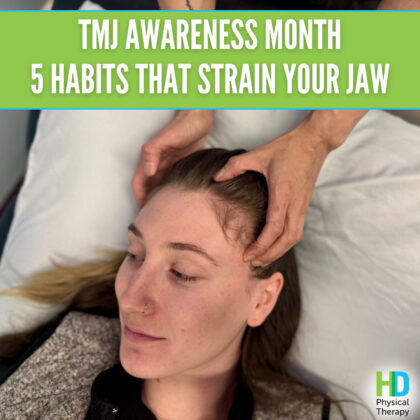
Treatment may include hands-on techniques to relieve tension in the jaw, face, and neck muscles, along with exercises that restore smooth, controlled jaw movement. Your therapist may also work on neck mobility and posture, teach you how to keep your jaw relaxed during the day, and help you change the habits that strain it.
Many people with TMJ disorders improve with conservative care. When it helps, your physical therapist can also coordinate with your dentist so that your treatment works together.
When to See a Dentist or Physician
Some jaw symptoms need a different provider first. See your dentist for tooth pain, cracked or loose teeth, or a bite that suddenly feels different. See your physician for swelling, redness, or fever around the jaw, or for jaw pain that follows a blow to the face. If your jaw becomes stuck open and you cannot close your mouth, seek urgent care.
Call 911 right away if jaw pain comes with chest pain or pressure, shortness of breath, sweating, or pain that spreads into your arm. These can be signs of a heart attack.
What to Expect at Your First Visit
Your first appointment starts with a conversation about your symptoms, when they began, and what makes them better or worse. Your physical therapist will then assess how your jaw opens, closes, and moves side to side, and will check the surrounding muscles, your neck, and your posture.
By the end of the visit, you will have a clear explanation of what is likely driving your symptoms, a treatment plan built around your goals, and simple strategies you can start using right away.
You Don’t Need a Referral in New York
Under New York’s direct access law, you can see a licensed physical therapist without a prescription from a physician. Direct access covers up to 10 visits or 30 days from your first evaluation, whichever comes first. After that, a referral is needed to continue treatment. Insurance coverage for direct access varies by plan, so it is worth checking with your insurer before your first visit.
The Takeaway
Jaw pain, clicking, headaches, and tightness are not something you simply have to live with. Many TMJ problems are tied to everyday habits, and those habits can be changed. This TMJ Awareness Month, give your jaw the attention it deserves.
Schedule Your Evaluation Today
If jaw pain or tension is affecting how you eat, sleep, or get through your day, our physical therapists can help. Schedule an appointment at our Midtown, Park Slope, or Upper East Side locations.


You must be logged in to post a comment.